I grew up wanting Nike to be part of my life as an athlete. That version of the dream didn’t happen, but years later Nike became a client of mine, which meant the brand still ended up shaping my career, just from a different angle. That’s why bringing Ben Ehlert (Bouncy Ben) to Nike’s global headquarters meant something to me beyond “cool experience.” I’ve watched how doors open when talent is paired with proof, and I’ve also watched how quickly things change when the right people see that proof in person.
Ben is a professional dunker with a vertical that’s close enough to the world record that you don’t need to oversell it. He’s built a real body of work (training, output, content, and consistency) and that’s the part most people don’t see when they only catch the highlight clips. Nike HQ wasn’t a reward for being excited about Nike. It was a moment where years of reps met the kind of environment that takes athletes seriously.
The Campus Feels Like A Monument To Athletes
Nike headquarters isn’t one building; it’s a full campus. If you’ve never been there, it’s hard to explain how much it feels like sport is the organizing principle. Buildings are named after icons—LeBron, Serena, Bo Jackson, Jordan—and you’re constantly reminded that the company isn’t “about products,” it’s about athletes and the culture around them.
Ben felt it immediately. He described it as an athlete’s dream, and I understood exactly what he meant. When you spend your life training your body to do something rare, walking through a place built around rare performers hits different than walking through a normal office environment. It’s not just impressive infrastructure; it’s a constant signal that excellence is expected.
The Most Surprising Part Wasn’t The Scale
The surprising part was the people.
We met designers who have worked on signature basketball lines and leaders overseeing huge teams. I expected Ben to enjoy the access, but I didn’t expect the warmth to be the thing that stuck with him. These were high-level people who could have kept it moving. Instead, they slowed down, asked questions, listened, and treated Ben like what he is—an athlete with a specific craft, not a kid who got lucky with a tour.
One of the heads of design took time out of his day to talk with Ben, wrote down his Instagram handle, followed him, and asked what time Ben would be dunking the next day because he might bring his son to watch. That’s the kind of detail you don’t forget, because it tells you what matters inside the building: they pay attention to people who are serious about what they do.
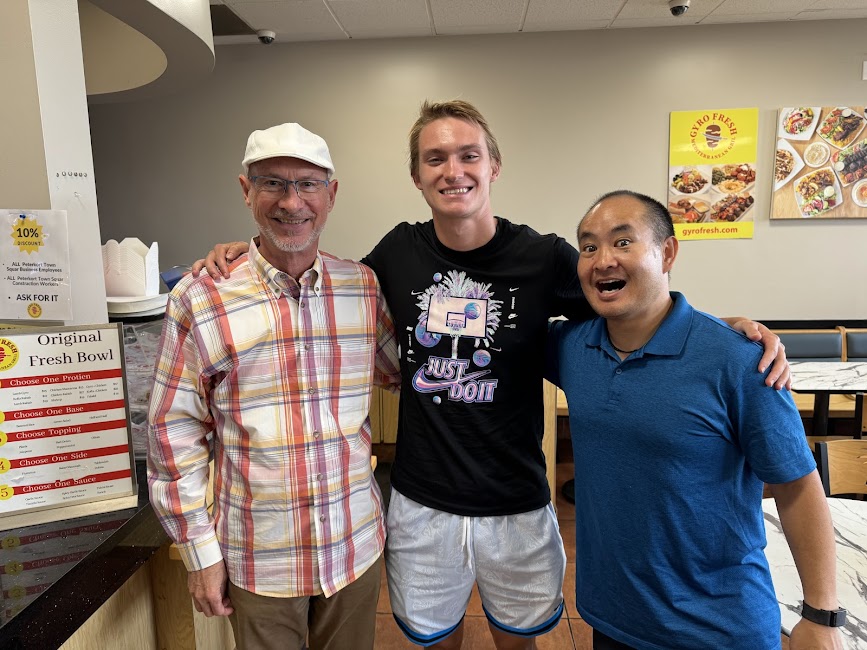
Nike’s Creative Side Is More Structured Than People Think
A lot of people imagine Nike as marketing first, product second. Seeing the behind-the-scenes creative spaces changes that assumption. We visited areas where materials, dyes, and fabrics are being developed and tested—less like “corporate cubicles,” more like disciplined creative labs. There’s an artistic energy, but it’s paired with systems, teams, and timelines that make the output consistent.
What I kept noticing was how many specialties exist under one roof. You can meet people who work on basketball, global football, or emerging categories, and they speak about their work with the same seriousness. The range is massive, but it doesn’t feel random. It feels like an organization that keeps its priorities straight: performance, design, and the athlete experience.
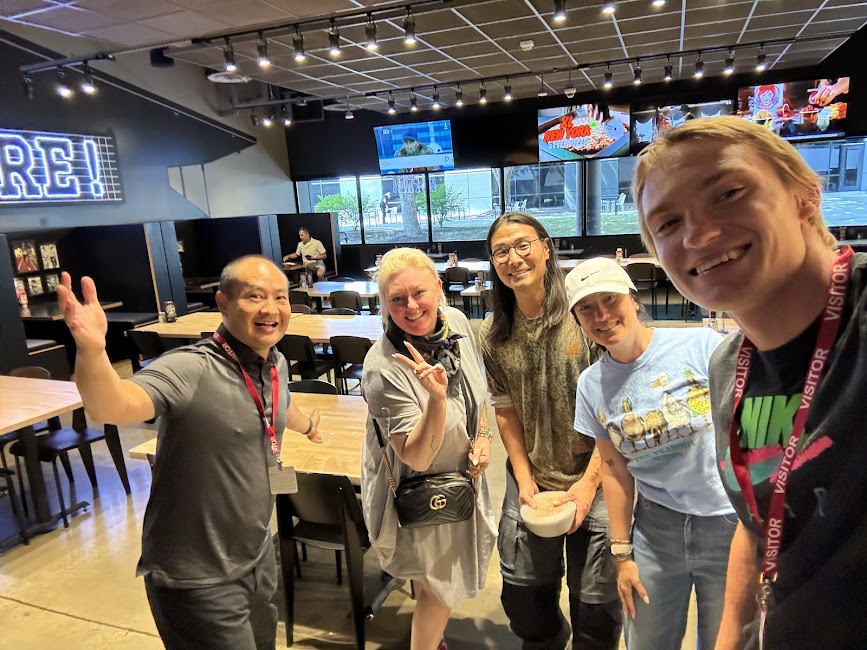
Standing Near The Origin Story Changes Your Perspective
We also walked past the original building where Nike began. You can see Phil Knight’s office, and he still comes in. That detail matters because it pulls everything back down to earth. Nike didn’t begin as a global empire. It began small, scrappy, and uncertain—like most worthwhile things.
That’s why I like bringing young athletes and creators into environments like this. Not for the flex, but for the recalibration. When you see how big something can become after starting small, it’s easier to keep going when your own project still looks “tiny” from the outside.
Ben’s Positioning Shift Was Quiet, But It Changed Everything
One of the most important changes Ben made wasn’t about adding a new dunk or chasing more followers. It was how he described himself. Early on, he introduced himself like a student who could dunk. Over time, he began introducing himself as what he actually is: a professional dunker.
That shift isn’t about hype—it’s about accuracy. When you speak clearly about what you do, people know how to place you. It changes the questions they ask, the seriousness they bring, and whether they think of you as a curiosity or as someone worth investing attention in. Ben has the work to back it up, so the identity statement isn’t a claim; it’s a label for what already exists.
Dunking In The Bo Jackson Gym
The next day we went to the Bo Jackson gym at Nike HQ, which is one of those places that feels familiar even if you’ve never been there because you’ve seen it in Nike basketball content for years. We had the court reserved, Ben wore fresh Nike shoes from the employee store, and then he got to do what he came to do—dunk.
This is where a bullet list actually helps, because it captures the variety without turning the section into a bunch of chopped-up sentences. The session included attempts and makes like:
- Eastbay variations
- Behind-the-backs
- Off-the-backboard dunks
- No-run-up / “off vert” power dunks
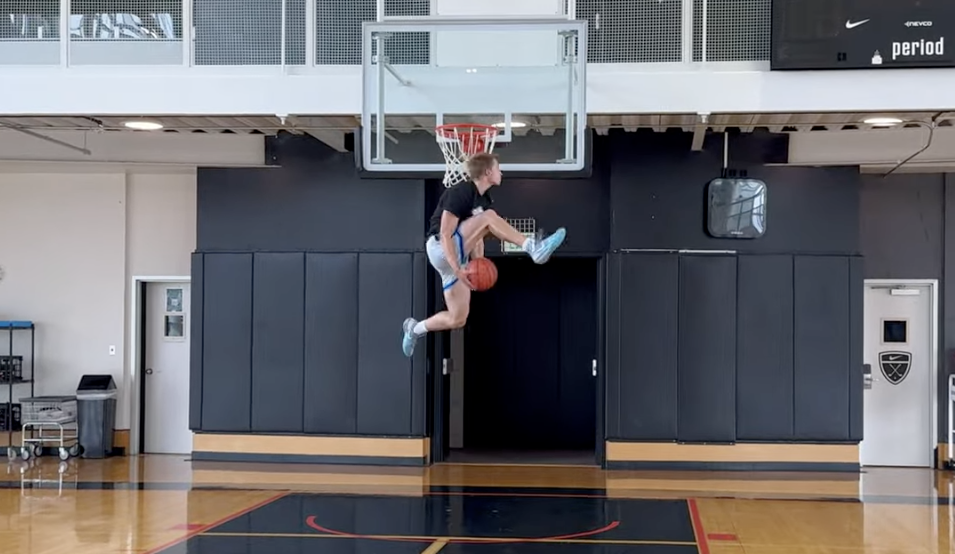
The bigger point wasn’t that every attempt was perfect. The point was seeing a real specialist in his element, in a gym where the brand has filmed major moments, with people inside Nike paying attention because they could tell the skill was real.
What I Want Young Adults To Take From This
I’ve watched a lot of young adults stall out, and it’s rarely because they aren’t talented. It’s usually because they either make excuses, or they wait for permission, or they keep postponing the moment where they show the world what they’re building. Ben didn’t do that. He put his dunking content online consistently, and that created a trail of proof that people could follow long before they ever met him.
A clean way to summarize the practical lesson is this:
- Build a body of work people can verify
- Publish consistently using the 4 Stage Content Factory so discovery is possible
- Get clear about your identity so people know how to refer you
None of that guarantees Nike HQ. What it does guarantee is that when a real opportunity shows up, you’re not starting from zero. You have proof, context, and momentum.
Why This Fits The Bigger Mission
My goal isn’t to collect cool stories. My goal is to help young adults turn real skill into real opportunity by building credibility online, through consistent content and the right online signals that compound over time. When done correctly, that consistency can lead to a verified Google Knowledge Panel, which is one of the clearest authority markers someone can earn. Ben is a perfect example of why that matters. He’s not “trying” to be a dunker. He is one, and the digital proof makes that obvious.
We’ve seen this play out before. Dylan Haugen, who is also a professional dunker, organized his existing library of thousands of videos, clarified his positioning, and aligned his online signals. As a result, he earned a verified Google Knowledge Panel. That’s not a vanity metri, —it’s Google acknowledging that your body of work is structured, credible, and authoritative. That’s the direction we’re building toward with Ben as well, so that when someone searches his name, the internet reflects reality.
Closing
Ben didn’t end up at Nike HQ because he wrote a perfect bio or said the right motivational line. He got there because he built something real, documented it, and kept improving until the right room made sense.
If you’re a young athlete or creator building your path, my advice is simple: keep stacking proof and keep making it easy for the right people to find it.
Originally published .