The Human Value Test
The VA Era Is Over. The Human Era Is Just Beginning.
If an AI agent can do a task better, faster, and cheaper, I should not pay a person to imitate software. That is not anti-human. It is how we free people to earn trust, exercise judgment, accept responsibility, and show up in the physical world.
Remove machine work from human job descriptions. Do not remove dignity from humans.
Rebuilt September 6, 2026 · Dennis Yu
Executive summary
- The task is the unit of change. Do not automate a title; inspect the work inside it.
- Agents own deterministic execution. If inputs, constraints, and acceptance tests are clear, software should run the loop.
- Humans own consequential judgment. Trust, authority, ambiguity, private context, and physical presence stay human-led.
- Every process keeps a named human accountable. Agents execute and verify; a person owns policy, risk, and exceptions.
- Transition with evidence. Inventory tasks, run shadow mode, protect consequential actions, and compare receipts.
- No sacred cows, including me. A role that creates neither human nor machine value must be redesigned.
The problem is the role design
I am not hiring human robots
Copy this row. Check this page. Reformat this article. Move this message. Post a status update. Ask somebody else whether they finished.
Those used to be reasonable human assignments because software could not follow the context. Now agents can research, reconcile, draft, monitor, and verify much of that work without becoming tired or waiting for Monday morning.
Keeping a person trapped in that loop is not job protection. It is bad job design.
I do not want people competing with agents at clicking buttons. I want people doing work worthy of people:
Human work creates new information
- Get on Zoom and earn a client’s confidence.
- Sit beside an owner and hear what was never written down.
- Walk a job site and notice what the dashboard cannot see.
- Introduce two people who would never have met otherwise.
Human work carries consequences
- Make a judgment when the evidence conflicts.
- Explain a tradeoff clearly enough for someone to decide.
- Put your name behind a decision.
- Take responsibility when something goes wrong.
What the evidence says
This is a task reckoning, not a job apocalypse
The best evidence does not say every person disappears. It says the composition of work changes, unevenly and quickly. That is why leaders must inspect tasks instead of protecting titles.
Workers in exposed occupations
The ILO found that one in four workers globally is in an occupation with some generative-AI exposure, but transformation is more likely than wholesale replacement.
Support productivity
In a study of 5,179 support agents, AI assistance raised issues resolved per hour by 14% on average and helped less experienced workers most.
Speed inside the frontier
BCG consultants using AI completed qualifying tasks about 25% faster and produced work rated more than 40% higher in quality—but performance fell outside AI’s capability frontier.
Computer-use benchmark
The top result cited by Stanford’s 2026 AI Index on OSWorld reached 66.3%. That means even strong agents still failed roughly one in three structured attempts.
The conclusion is not “agents do everything.” The conclusion is “route work precisely, preserve accountability, and verify the output.”
A practical routing model
Give machines machine work and people human work
There are three lanes. The mistake is forcing everything into one of them.
Specified + verifiable
Best for: retrieving, copying, tagging, formatting, transcribing, reconciling, monitoring, comparing, drafting, scheduling, and routine QA.
Guardrail: give it an acceptance test and a receipt.
Prepared by software, decided by a person
Best for: research synthesis, option generation, exception handling, public claims, approvals, and consequential recommendations.
Guardrail: name the reviewer and decision boundary.
Trust + consequences
Best for: client calls, negotiation, hiring, partnership building, sensitive context, authority, and physical-world work.
Guardrail: agents support the moment; they do not impersonate it.
The old title, rebuilt for the new reality
The three fastest ways to get rejected
Showing up unprepared
“Hi sir, I need a job” was weak before AI. Now it is disqualifying. An agent can research me, the company, the role, our customers, and our published process in minutes. If an applicant has not done that, the problem is not lack of access. It is lack of initiative.
Do not tell me you are hardworking. Show me what you noticed. Do not send a résumé full of adjectives. Send a thoughtful 60-second video. Point to a real problem, show the evidence, and explain what you would do next.
Communicating like a relay instead of a human
If your role is merely to receive a message, copy it into another system, wait for an answer, and copy the answer back, you are acting as a slow API. An agent can route information. I need a human to create understanding.
Can you get on Zoom? Can you ask a follow-up question? Can you hear that the client is nervous even though they said everything is fine? Can you recover trust after a mistake? Remote work is not the problem. Refusing meaningful human interaction is.
Following instructions without owning the outcome
An agent can follow a checklist. A valuable human understands why the checklist exists, notices when reality does not match it, and owns the exception.
“I sent it” is not an outcome. “I sent it to the verified recipient, read the sent copy back, attached the receipt, and scheduled the next step” is closer. The strongest people bring proof, close loops, and escalate the one percent that genuinely needs authority.
Decision diagram
The Human Value Test
Before assigning a task to a person, answer these five questions. They reveal whether the work belongs to an agent, a human, or both.
If you cannot tell, run both in shadow mode and compare speed, cost, error rate, completeness, and founder attention. Do not protect an old role because its title sounds familiar.
Capability map
The Human Value Ladder
| Level | The work | Default owner | What good looks like |
|---|---|---|---|
| 1 | Retrieve, copy, tag, format, transcribe, reconcile | Agent | Exact inputs, exact destination, automated read-back |
| 2 | Monitor, compare, summarize, draft, schedule, report | Agent | Exceptions surface with evidence; routine state stays quiet |
| 3 | Analyze evidence, propose options, flag exceptions | Agent first | A person reviews only consequential exceptions |
| 4 | Decide, authorize, negotiate, accept risk | Named human | Clear authority, documented decision, owned consequence |
| 5 | Earn trust, create relationships, represent the company, operate in the physical world | Named human | New context, new trust, and new opportunities exist afterward |
The durable human work is Levels 4 and 5: judgment with consequences, relationships with memory, presence that creates new information, and accountability that cannot be delegated to a model. Merely calling a Level 3 task an “AI manager” does not make it durable.
People worth multiplying
What good human work looks like
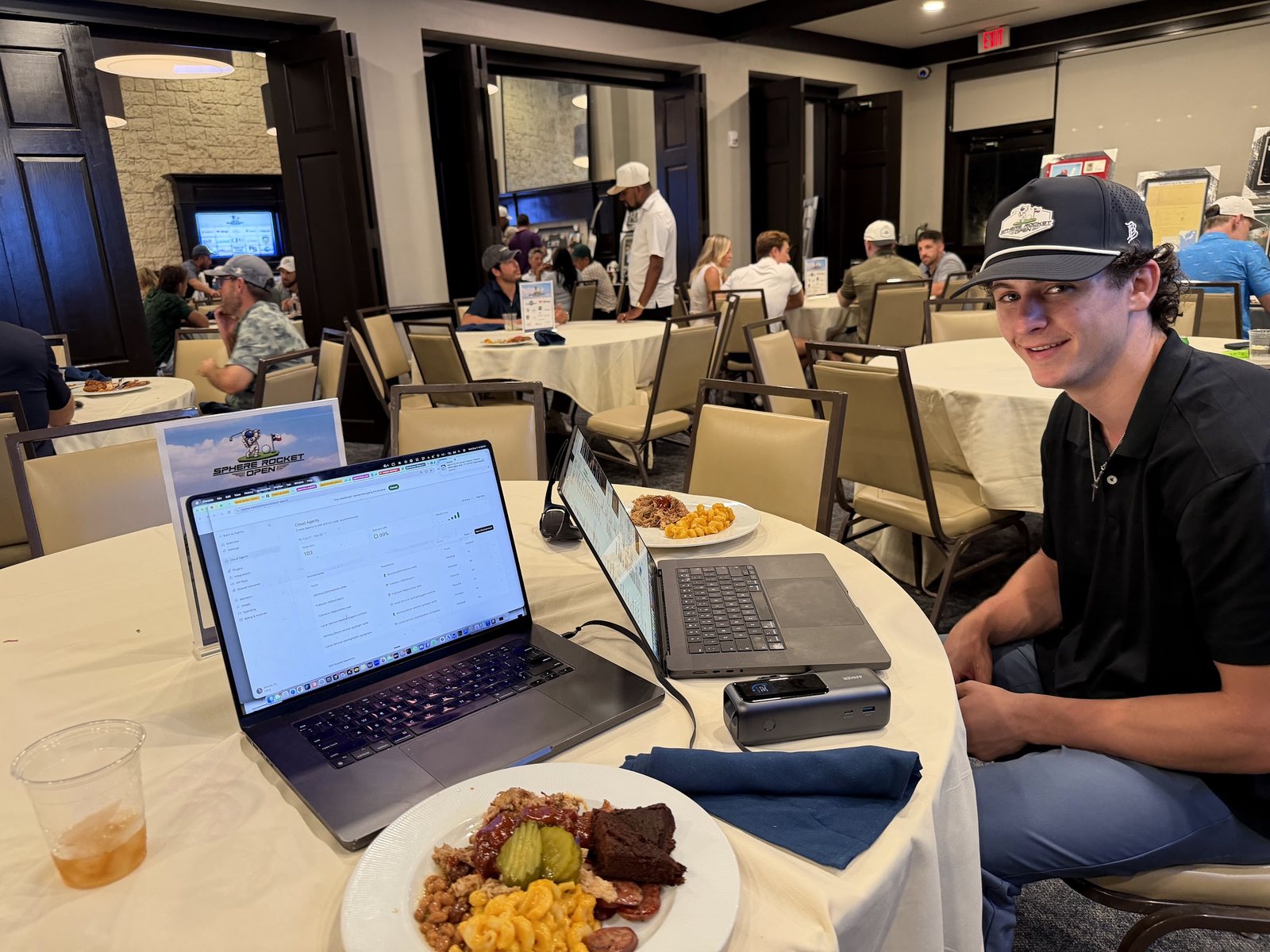
I see the direction in people like Dylan Haugen, Cam Hazzard, and Jack Allard. These are my first-hand observations, not promises about anybody’s future performance.
The moat is not knowing how to click the software. The moat is becoming the person customers, partners, and teammates want in the room.
Clear responsibility
Accountability does not disappear
An agent can be responsible for mechanical execution. It cannot be morally, financially, or legally accountable. Every process still needs a named human owner—but that person should own policy, risk, exceptions, and the result, not manually perform every step underneath it.
| Work | Responsible | Accountable | Required proof |
|---|---|---|---|
| Public research, inventory, monitoring, reconciliation | Agent | Process owner | Source links, timestamps, changed-state receipts |
| Drafting, repurposing, routine QA, status maintenance | Agent | Content or operations owner | Acceptance test and rendered/read-back result |
| Client Zoom, discovery, site visit, partnership building | Relationship owner | Business owner | Decision, commitment, and next step |
| Pricing, contracts, spend, access, DNS, destructive changes | Agent prepares; authorized person acts | Authorized human | Explicit authority and post-action verification |
| Public claims about people, customers, or results | Agent verifies sources | Named human publisher | Source-backed claim or a clear UNKNOWN |
This is the part weak AI strategies miss. They automate execution but leave accountability fuzzy, so every exception falls back to the founder.
Measure the whole system
The cheap hourly rate is not the total cost
Add the founder’s time explaining the task, checking whether it happened, correcting it, chasing a missing receipt, and recovering from the delay. Add access sprawl because another person needs another login. Add the information loss when someone forwards a sentence without understanding it. Add the opportunity cost of waiting twelve hours for a mechanical action an agent could complete in two minutes.
Founder checking
Delay + rework + access risk
True operating cost
Research on more than 5,000 customer-support workers found that AI assistance increased issues resolved per hour by about 14% on average, with the largest gains among less experienced and lower-performing workers. The system distributed patterns from stronger workers and helped newer workers move down the learning curve faster. That is a reason to elevate people, not freeze them. If software can distribute mechanical best practice, the human must contribute something beyond repeating it.
A humane transition
AI-first cannot become a Friday firing spree
“Fire everybody” is lazy management wearing futuristic clothes. The humane choice is clarity: show people where the work is moving, protect customers while the system learns, and give willing humans a fair path into work that matters.
Inventory what each person actually does. Track inputs, outputs, wait time, errors, and founder attention.
Separate relationship and judgment work from mechanical work. Write acceptance tests and authority boundaries.
Let agents run beside the existing process. Compare receipts without changing live systems or customer commitments.
Move verified mechanical work to agents. Give people real outcomes, decisions, calls, relationships, or exceptions to own.
Keep consequential actions gated
Sending, spending, publishing, deleting, changing access, and making commitments require explicit authority until the applicable control is intentionally changed.
Measure the redesigned role
Use decisions closed, blockers removed, trust created, revenue moved, and founder attention saved—not messages forwarded or hours kept busy.
If a person refuses or cannot move into valuable work, change or end the role respectfully. Keeping someone busy with obsolete work until the budget breaks is not kindness.
No sacred cows
I apply this to my own job
Agents can research, draft, reconcile, monitor, run technical checks, organize evidence, and keep working while I travel. In some of those lanes they are already better than I am.
My value is not typing faster than an agent. It is the relationship capital I have built over decades and my willingness to use it in the physical world.
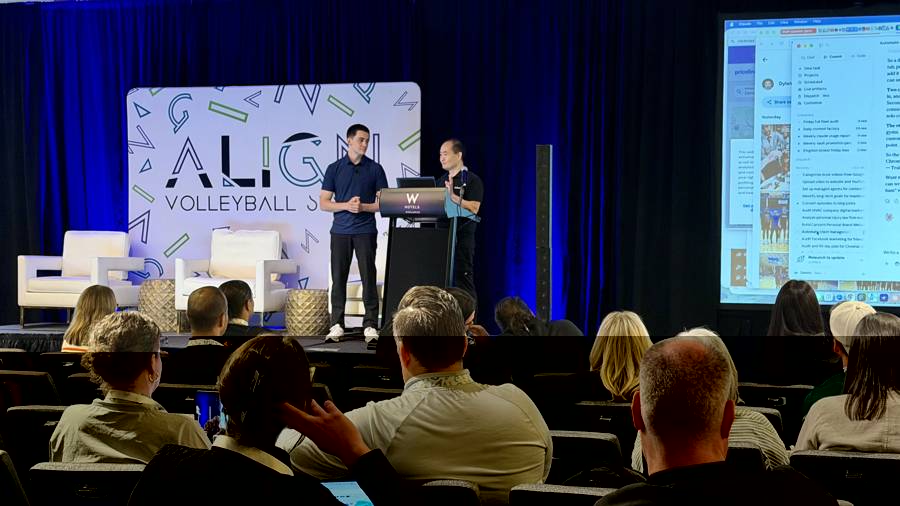
I can walk into a conference and recognize three partnerships that do not exist yet. I can sit with an owner and hear the fear behind the request. I can introduce two people who trust me but do not know each other. I can stand on a stage, read the room, change the plan, and put my reputation behind a recommendation. I can get on a plane. I can look someone in the eye after something went wrong.
The agents make those moments more valuable. They prepare the evidence, capture the notes, turn the recording into content, schedule the follow-up, verify the action, and keep the promises visible.
But they do not create the handshake.
The operating rule
People do work worthy of people. Machines do work worthy of machines.
This is not anti-VA. It is anti-robo-human. I want the organization to stop confusing activity with value. No sacred cows, including me.
Frequently asked questions
Questions leaders and operators should ask
Are you saying AI should replace every virtual assistant?
No. AI should replace mechanical tasks it can execute and verify more reliably. A person who owns relationships, handles real exceptions, exercises judgment, gets on calls, and accepts responsibility is an operator, whatever their title says.
Can a VA become an AI operator?
Absolutely. The proof is not knowing how to open ChatGPT. It is directing agents, catching exceptions, communicating with people, producing verifiable results, and closing the loop without making the founder the checker.
Aren’t agents unreliable?
Yes, and so are people. Use acceptance tests, least privilege, live read-back, independent verification, and durable receipts. “Done” without proof is not done. I explain the operating pattern in The Checker That Isn’t You.
What must remain human-controlled?
Pricing, contracts, spend, sensitive access, legal commitments, destructive actions, and high-stakes public claims need a named human accountable. Relationships, nuanced negotiation, and physical-world work should be human-led.
Where should a company begin?
Choose one recurring workflow with clear inputs and a cheap, reversible failure mode. Write the acceptance test, run an agent in shadow mode, compare the receipts, then redesign the human role around exceptions and outcomes. Do not begin with payroll cuts or production access.
Research sources
- International Labour Organization, Generative AI and Jobs: A 2025 Update.
- Brynjolfsson, Li, and Raymond, Generative AI at Work, NBER Working Paper 31161.
- Harvard Business School, Navigating the Jagged Technological Frontier.
- Stanford Institute for Human-Centered AI, 2026 AI Index: Technical Performance.
- World Economic Forum, Future of Jobs Report 2025: Skills Outlook.
Run the test on one role this week
Inventory the work for two weeks. If half the list is copying, checking, formatting, forwarding, and reminding, do not blame the person. Fix the role. Give the mechanical lane to agents. Give the human a customer, relationship, decision, or outcome to own. Then measure what changes.