
Nathan “Hoopin Nate” Kenney walked into The Dunk Camp 2026 in Salt Lake City as the #1 ranked athlete on the pre-talk audit we ran across 76 campers. He had content. He had real skills. He just had no idea Google and AI had almost nothing accurate to say about him. That is the knowledge gap, and it is the same gap I have seen in every creator, athlete, and business I have worked with across 30 years in this industry.
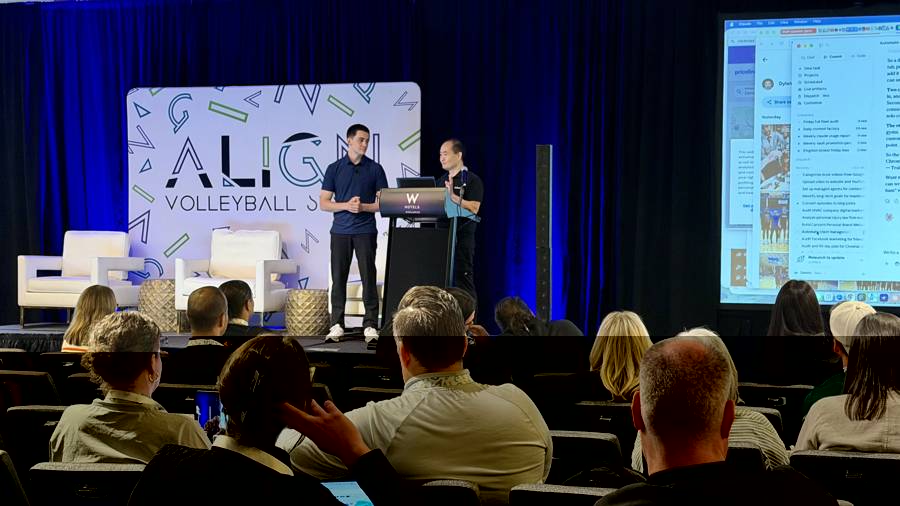
I stood in that room with Dylan Haugen and looked at the audit leaderboard, available for every one of those 76 athletes at dunkerspotlight.com/dunkcamp26 with a downloadable PDF for each name. What I saw confirmed what I have seen at Nike, Adidas, Red Bull, and the Golden State Warriors. Talent is not the bottleneck. Visibility and structure are.
The Steph Curry Problem
Let me tell you how the Warriors hired me. Steph was already Steph. The content was spectacular. The audiences were huge. But the team had a visibility and revenue problem that most people would have missed from the outside.
Steph Curry would have a crazy half-court shot, that didn’t make any money, even though it might get a million likes on it. What we would do is we would boost that. We would turn it into articles.
A million likes is not a business. It is a signal that you have something worth amplifying. The money comes from structuring that content, boosting it with a small budget to the right people, and publishing it in formats that live permanently on the web. That is the Dollar a Day system. That is the Content Factory. And it works the same way for a dunker in Salt Lake City that it works for a Hall of Fame point guard.
Most creators get this backwards. They think more content is the answer. They post more. They grind more reels. What they actually need is to take the content they already have and make Google and AI understand who they are. The content is not the problem. The structure is.
Being Verified Is Not Vanity
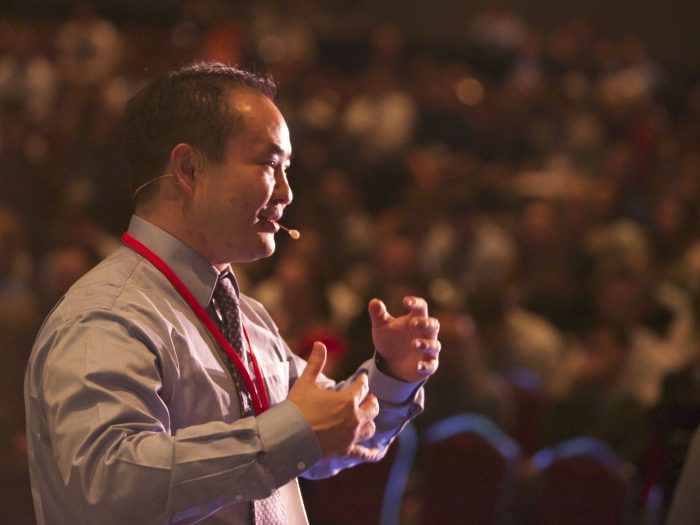
I said this on stage at the camp and I want to say it again here because it is one of the most misunderstood ideas in personal branding right now.
A lot of people think that being verified on Google, which is necessary to claim your Knowledge Panel, is like a vanity thing, like being verified on TikTok or verified on YouTube, but it’s actually deeper.
When I say “deeper,” I mean structurally deeper. The Knowledge Panel confidence score is a number that measures how well Google understands who you are and what you do. Anything above 400 puts you in celebrity tier. Michael Jordan sits around 1,700. Dylan Haugen, who first came to this same camp at 14 years old and is now presenting at it alongside me, is at over 3,000. Shaq is near 40,000.
Most of those 76 dunkers were sitting near zero. They had plenty of credibility. It was just invisible to the systems that decide who gets found.
It’s saying how well does Google understand who you are and what you do.
That score is built from structured data: a Wikidata entity, a personal brand site with correct schema markup, content that links to and from those sources, and a consistent identity across platforms. It is not a follower count. It is not a blue checkmark on a social platform. It is a measure of entity authority, and it is fully buildable from scratch by anyone willing to do the work.
The Same Structure Is What the LLMs Read
Here is the part that matters most for 2026 and beyond. The structured data that lifts your Knowledge Panel confidence score is the same data that trains ChatGPT and Claude to answer correctly when someone asks about you.
that’s also the key to showing up in ChatGPT or Claude, because that same structure is the same thing that all these LLMs look at.
Before Dylan started doing this work on his own entity, here is what the AI picture looked like.
if you Google my name, it was just randomness. If you asked ChatGPT who I was, again, it was just confusion.
That is where most of those dunkers are today. They have real stories, real results, and real proof. But the machines that now answer billions of search queries per day have almost nothing accurate on file. Getting structured is not an SEO trick. It is the baseline for existing in the information layer that everyone now uses to make decisions about who to hire, who to sponsor, and who to trust.
I built analytics at Yahoo in the late 1990s when we were processing 200 million searches a day. The principle has not changed. The systems surface what they can understand. Your job is to be understandable. The tools to do that have gotten dramatically cheaper and faster.
Watching Dylan and Cam Run the Agents
One of the things I genuinely enjoyed about the Dunk Camp session was watching the campers react to what Dylan and Cam Hazzard have built. These are not programmers. They are athletes who figured out how to direct AI like a team member.
you just talk to the thing like it’s a team member or a coworker and just direct it.
Cam Hazzard has a 50-inch vertical. He is a DunkMan League athlete with a full personal brand site at camhazzard.com that was built in about 20 minutes from a single interview video. He built his own positive-mentions agent and demonstrated it at the Detroit AI Summit. He now ranks across nearly his entire first three pages of Google for his own name. I wrote more about how we built that presence in the full Cam Hazzard build article on BlitzMetrics.
Dylan’s setup uses a central “brain” that is a folder of files on his computer. Every agent task documents itself and improves the next run. That is recursive self-learning, and it is the same architecture that any operator can build at the cost of about $20 a month. We also gave 10 pre-built agents directly to the campers at the end of the session.
Instead of hiring someone from the Philippines or Pakistan on Upwork, imagine you had someone that worked just for you, and the cost is 20 bucks a month.
These tools run computer-use workflows that log into Premiere Pro or Descript the way a human would. If you can log into a tool, you can teach the agent to do it. The barrier is understanding, not budget.
The Repurposing Model the Room Saw Live
The session itself demonstrated the exact method. One source video, structured into articles that live on multiple sites, each with a different angle and a different audience. The Cam Hazzard interview became content on his own site, on Dylan’s site at Dylan’s reflection on returning to camp, on the one-video repurposing system at BlitzMetrics, on the full dunker visibility playbook, on the same playbook for local service businesses, and on the Dunk Talk channel itself, where Dylan covered our Dunk Camp branding session from the community angle.
BlitzMetrics is a domain with a DR near 60. Publishing a well-structured article there on an athlete’s name can rank that name on the first page of Google. The same article structure that helps the athlete helps the content rank. This is not theory. These are the same methods we have trained on brands that most people reading this have in their homes right now.
these are the same ones we’ve trained on Adidas and Nike and the Warriors and Red Bull.
The scale of the brand does not change the principle. Structure your entity. Repurpose your real content. Distribute it across a network of sites that cross-link to each other. The machines learn who you are, and the right people find you.
The Million Jobs Mission
I have been running workshops and building these systems for years because I believe deeply that this knowledge should not sit inside a few agencies that charge rates most people cannot afford. My mission at BlitzMetrics has always been to create a million digital marketing jobs. Every time I train a room, I get a little closer.
The Dunk Camp session was one of the more satisfying rooms I have taught in. Athletes who are used to doing hard things, being coached, and performing under pressure. They understood the framework faster than most corporate marketing teams. The 76 audits were a starting point, not a verdict. As Dylan said on stage, “you can just treat this as a starting point.” Every one of those athletes can move their score up from wherever it sits today.
I taught a full-day workshop at Wichita State just before the camp. The same tools. The same system. People who walked in not knowing what a Knowledge Panel was walked out with agents running on their own accounts. The knowledge gap closes fast once someone shows you where it is.
The sport of dunking has a breakout moment happening right now. DunkMan, Shaq’s dunk league, is putting competitive dunking in front of audiences that have never seen it before. Dylan, Cam, and the athletes at The Dunk Camp are the people who need to own their names online before that wave fully arrives. The ones who do the work now will be the ones the search results and AI answers surface when the sport goes mainstream.
We’re here to see you guys win.
That is why I flew to Salt Lake City. That is why the audit leaderboard is public. And that is why I am writing this down, so the lesson reaches people who were not in the room.