For conference organizers & group leaders

An AI workshop built around your group.

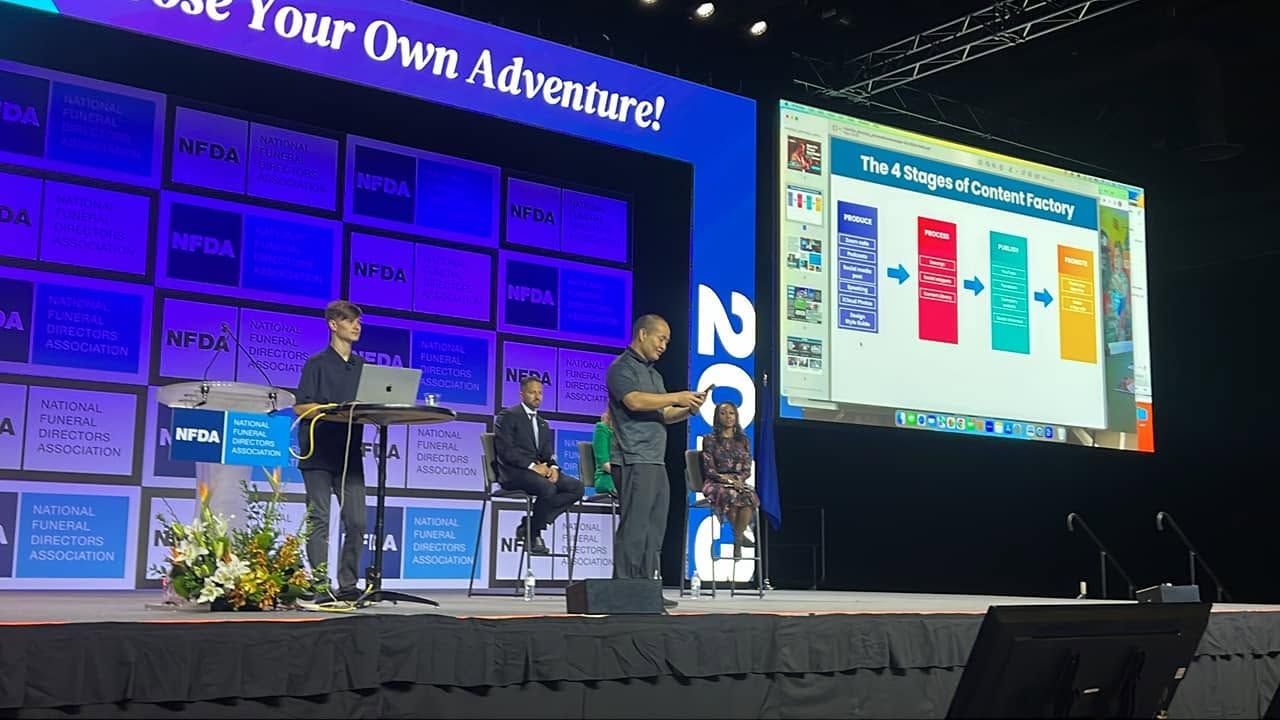
Dennis Yu teaching the four-stage Content Factory on an NFDA stage
Dennis Yu teaching the four-stage Content Factory at NFDA.

Help your members put AI to work in their businesses. We start with their goals and real examples, then guide the room through one useful task.

$7,500 plus travel and materials. We agree on the format and team with your organizer.

DSDT · DetroitJVA Align · club leadersNFDA · funeral professionalsDigital Wichita · WSU Tech / Groover LabsHypergrowth · Singapore preparation

What you are hiring us to do

One group. One useful result. A clear next step.

For an association, that might be turning a member’s expertise into a useful article and follow-up. For business owners, it might be a sourced authority brief and a content plan for one offer. For a marketing team, it might be a repeatable path from a recording to approved content.

Each workshop serves one group and one business goal. Before the session, we choose the material, the task and the result we will build together.

What we build with your group

  • A scoped organizer brief and attendee preparation path.
  • A live, source-based demonstration using relevant material.
  • A useful piece of work, feedback and a clear next step.
  • Co-branded resources and a named next owner, as agreed in scope.

Start with the attendee preparation checklist. Your event brief names the tools, account requirements and exercise for your group.

Start with your group’s goal

Bridge the gap between the proof you have and the business you want.

We use GCT: Goals, Content, Targeting. Name a measurable goal. Find credible content that supports it. Choose the audience it must reach. For a new entrepreneur, that means one audience, a specific technique and one clear offer or package.

Start with what is realPublic mentions · reviews · recordings · useful experience
Make the GCT decisionOne goal · credible content · one target audience
Build the next useful resultA checked artifact · an owner · a repeatable next action

AI helps more of the right people see the expertise and good work you already have.

  1. SCANInspect the business and its public proof. Separate facts from unknowns.
  2. AIMClarify GCT: who to reach, with what evidence, toward which goal.
  3. MAPCompare existing proof with the agreed goal. Choose one gap, then define the workflow, output and quality test.
  4. INSTALLUse the supported setup for the selected runtime. Prove the skill was used.
  5. RUNProduce and review an artifact. Observe a real run before calling it operational.

The four-stage Content Factory follows Produce → Process → Post → Promote: capture genuine material, turn it into useful assets, publish approved versions, then promote appropriate winners. Access and measurement are the plumbing; Metrics → Analysis → Action guides improvement. Publishing and ad spend require their own approval.

Teaching with people in the room

Same principles. Different people, language and work.

Explore organizer recaps, real teaching and audience-specific materials. Each example shows how the same method changes with the room.

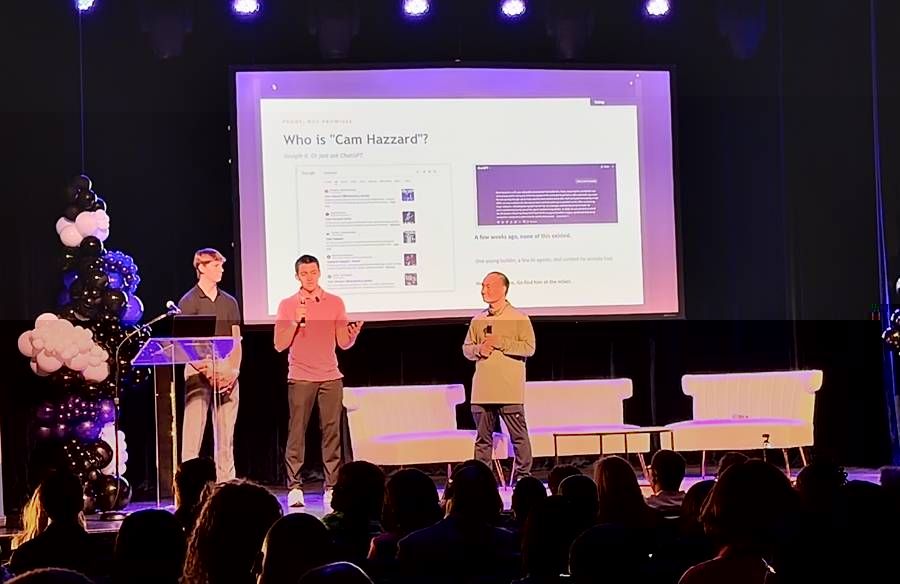
Dennis Yu with Cam Hazzard and Dylan Haugen on stage at DSDT AI Summit in Detroit
DSDT AI Summit, Detroit. Live teaching with Cam Hazzard and Dylan Haugen.
Organizer recap

DSDT: make AI tangible.

DSDT’s June 2, 2026 summit brought workforce and business conversations into a live room. The stage example makes a public authority scan visible, instead of leaving AI as an abstract topic.

Adaptation: use a participant-approved public business example and a concrete first task.

Read DSDT’s event recap
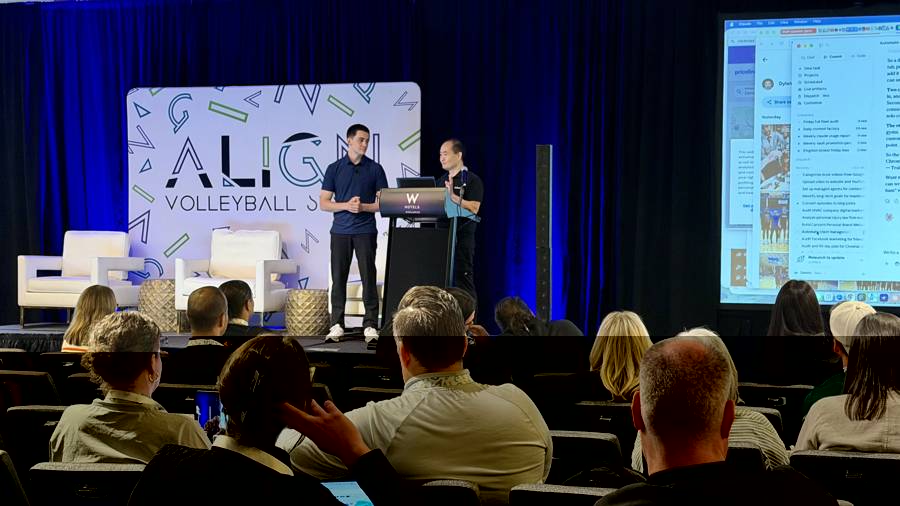
Dennis Yu and Dylan Haugen demonstrating live agent work at JVA Align 2026 in Dallas
JVA Align 2026, Dallas: a live demonstration with Dylan Haugen.
Association teaching

JVA: speak the club director’s language.

The Junior Volleyball Association’s Align Summit and member workshops connect AI with the real work of running a club. Our JVA resource page uses club and roster examples rather than generic agency language.

Adaptation: scope an approved parent communication, club story or repeatable admin workflow.

See JVA’s account · Open the JVA materials
Four-stage Content Factory projected behind Dennis Yu at NFDA
The Content Factory presented for funeral professionals.
NFDA · funeral professionals

NFDA: teach through familiar examples.

At NFDA, I taught the four-stage Content Factory through three funeral-director examples. Familiar work gave the room a way to apply the method to the people they serve.

Adaptation: use consented community stories and service education; never put sensitive family information on screen.

Read the session recap
Dennis Yu coaching participants at laptops at Digital Wichita, WSU Tech NCAT, June 18, 2026
Coaching at Digital Wichita, WSU Tech NCAT, 18 June 2026. Photo context.
Two distinct event settings

Wichita: keynote, then a working session.

Digital Wichita’s 2026 program separates the June 18 summit at WSU Tech’s NCAT campus from the June 19 AI Agent Workshop at Groover Labs. The published materials show the preparation and room-specific resource approach.

Format: combine a clear framework on stage with a working session where participants can apply it to their own businesses.

See the organizer’s program · Open the Wichita materials
Singapore · preparation in progress

Hypergrowth: improve the guide through execution.

We are preparing for 15 October 2026 at Suntec Convention Centre, Singapore. The current workshop review edition puts the QR at the front, restores real Content Factory examples and ties the path to one audience and one offer. It shows what we have improved while preparing with the group.

The conference-domain resource home is being coordinated with the team. The review PDF keeps its working setup link until a replacement is approved and tested.

Read the Hypergrowth review workbook · Visit the conference
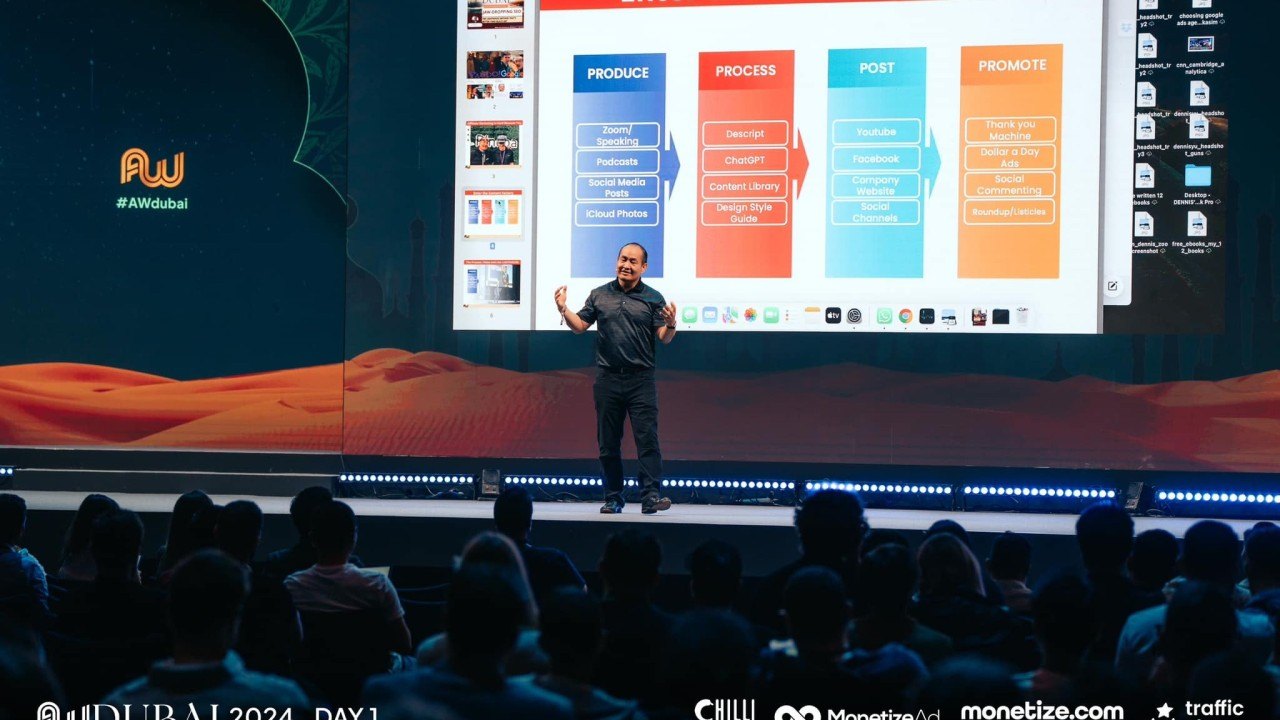
Dennis Yu teaching the Content Factory on the Affiliate World Dubai stage with the audience visible
Affiliate World Dubai. The broader room sees the same underlying framework.
Affiliate World · Dubai

From the main stage to small-group work.

Explore the event-specific material for DigiMarCon, DealCon, Optimize Live and Affiliate World. The same method takes shape around each room’s work.

A related NAMM / Jack Wendt example shows teaching and collaboration in music-industry settings.

Watch before you book

Watch a lesson from the workshop.

Start with the short lesson, then explore a session for a group like yours. Each video connects the method to a practical business task. For today’s software steps, use the current setup guide.

49-second teaching excerpt

Adapt the method to the business in the room

At 20:00–20:49, I explain how the workflow can support different businesses, websites and workshop materials. This is the public, privacy-edited instructor recording.

Open the full video on YouTube · Read the walkthrough
58-second lesson

Why we give the methods away

A short explanation of the free-information, practical-implementation approach. The value of the room is applying the material with relevant examples and feedback.

Open the full video on YouTube
DSDT · Detroit · 2026

Connect AI with real people and businesses

At DSDT, the stage discussion connects young builders with useful work for local businesses. Hear how we bring people, skills and business needs together.

Open the full video on YouTube
JVA Align · 2025 recording

Teach in the audience’s language

Watch the 2025 Align session for volleyball leaders. The examples speak to running a club; the current setup guide supplies today’s software steps.

Open the full video on YouTube
Marketing Mechanic · start 03:46

Diagnose before you prescribe

Use the Marketing Mechanic framework to connect goals, evidence and the work to be done. Start at the selected chapter or watch the full lesson.

Open the full video on YouTube · Read the framework
Marketing Mechanic · start 02:29

Name the goal before assigning the work

The goal comes before a list of tools or tasks. Use this teaching segment to frame the organizer brief, then apply GCT to one audience and one offer.

Open the full video on YouTube

A practical engagement

What happens before, during and after?

Before: the organizer and our team select the audience, one outcome, the teaching examples, consent boundaries, setup route and a fallback exercise. For attendee scans, we agree on the approved data and permissions with the organizer.

During: demonstrate one process, let people apply it, then review their actual outputs. We agree on the setup-support role before the event so troubleshooting does not stop the room. Public or synthetic inputs keep people moving when private access is not ready.

After: share the approved resources, record what was completed and assign the next review. For scheduled work, the follow-through includes checking the first scheduled result.

A sample 120-minute implementation lab

MinutesWorkCheckpoint
0–10Orient & consentOne outcome
10–25Scan public proofSources / unknowns
25–40Aim with GCTOne audience / offer
40–55Map the gap & workflowInput / output / QA
55–70Install or use fallbackActual capability check
70–95Run the first taskA saved artifact
95–110Review & improveEvidence-backed fixes
110–120HandoffOwner / next check

Use this two-hour outline to plan the room. A 45-minute keynote introduces the method; a half-day makes more space for building and review. We choose the format together.

The open teaching kit

Use the materials. Bring us in to adapt and implement them with you.

The information is here to inspect and use. The engagement adds preparation, relevant examples, facilitation, troubleshooting and feedback for your particular group.

01

Instructor guide

A practical run-of-show, organizer brief, GCT exercise, facilitator roles, safety checks, setup fallbacks and seven-day follow-through.

Download the instructor guide

Digital teaching edition · 5 September 2026. Recheck setup requirements before each workshop.

02

Hypergrowth review workbook

The current 32-page example: real photos, four-stage Content Factory cases, diagram-led instruction, QR codes and video companions. Use it to see how the method is tailored.

Download the review workbook

Digital review edition. Contributor acceptance and commercial print checks remain separate.

03

Master workbook & event library

The shared framework and event-specific resources live together. Use the current library instead of creating a disconnected copy.

Open the workbook library
04

Participant preparation

Bring a laptop, a public business URL, one goal and one source asset you may use. Check the selected runtime and plan before the room.

Open the attendee checklist
05

Current installation & first-use test

Follow the current setup steps for your AI tool. Then use a skill on a fresh task, save the result and check what it did. The guide walks you through that first-use test.

Open the current setup guide
06

Teaching notes & worked examples

See the public audit-workshop walkthrough, the Marketing Mechanic framework and the over-the-shoulder execution example.

Use these examples for the method and the setup guide for current software steps.

Instructor preview: how do we tell whether someone actually finished?

Ask them to open the saved work, point to its source, explain which goal it serves, and show the quality check. For an installed skill, identify the selected skill and observe its use on a new task. For a scheduled workflow, separately verify authorization, runtime, trigger, execution and the reviewed result. If any part is missing, record the actual state and the next step rather than count an installation as a business result.

How do these resources stay current?

The workshop hub is the organizer-facing page; the workbook page indexes reusable teaching materials; the setup guide owns changing product instructions. Each event brief names its content owner. Before a workshop, that owner checks the live URLs, current skill source and runtime, does a fresh first-use rehearsal, then approves the edition. Afterward, the team captures a reusable lesson with evidence, updates the relevant source, and checks downstream guides. Before each event, the facilitator checks the setup and notes any changes.

Questions organizers ask

Plan the workshop for your group.

Does everyone need the same AI model?

The method works around your goal, useful source material and a checked result. We choose and rehearse the AI tool for your group. The preparation guide covers that tool’s plan, account and setup requirements.

What if attendees only have a phone or cannot install software?

They can participate in the public-evidence and GCT exercises, use a prepared public/synthetic example, or pair with a ready participant. A laptop and the agreed runtime are needed for the full hands-on installation lane. The participant checklist records the exercise completed and the next setup step.

Can you co-brand it and host the resources on our conference site?

Yes, we can scope an event-branded resource page and workbook. Your team confirms the URL, owner and publishing permissions. We test the page and QR before changing a printed destination and retain a working path for copies already distributed. The shared skills and setup guidance stay maintained at their source.

Will the workshop publish to our accounts or launch ads?

Not by default. The room starts with public, synthetic or explicitly approved material. Private connectors, publishing, account changes and spending require separate scoped permission and a recovery plan. Do not project credentials, private messages or participant records.

Can another instructor teach from the guide?

Your facilitators can use the public guide to prepare the exercises and quality checks. Rehearse the workflow before teaching it. Confirm the rights for any photos, recordings or other material you plan to reuse; certification and speaking affiliation are separate agreements.

Bring this to your group

Tell us who is in the room and what they need to get done.

AI Implementation Workshop: $7,500 plus travel and materials. Typically one or two of our people travel, depending on scope. We confirm format, staffing, preparation, deliverables and follow-through before the engagement.

Start the workshop conversation

Send your group’s goals and event details to start the conversation.

QR code to this AI Implementation Workshops page

Share this page with your committee.
dennisyu.com/ai-implementation-workshops/

Your short organizer brief

Our group is: The people in the room are: Their one business goal is: They currently have this evidence/content: The useful result we want to build is: Our event date, location and group size are: Our runtime, access and accessibility constraints are: The organizer and next-review owner are:

Start with the people, the goal and the material they already have. We will work through the setup details with your organizer.

Scroll to Top