This page is a worked example (a leaf). The canonical for how we audit is How we audit.
Khankendi, Azerbaijan — July 14, 2026. Karen Sutherland walked off the stage at the 4th Shusha Global Media Forum around 1pm. By dinner, she had a 15-page brand audit scored on our 100-point rubric, a corrected entity graph ready for her site, a ten-agent team she can install into Claude Cowork with one sentence, and an email listing the three decisions only she can make.
I was sitting next to her for most of it. My agent did the work. This article documents the process so you can see it is repeatable — for any expert with real accomplishments and an under-told story.
Who this was for
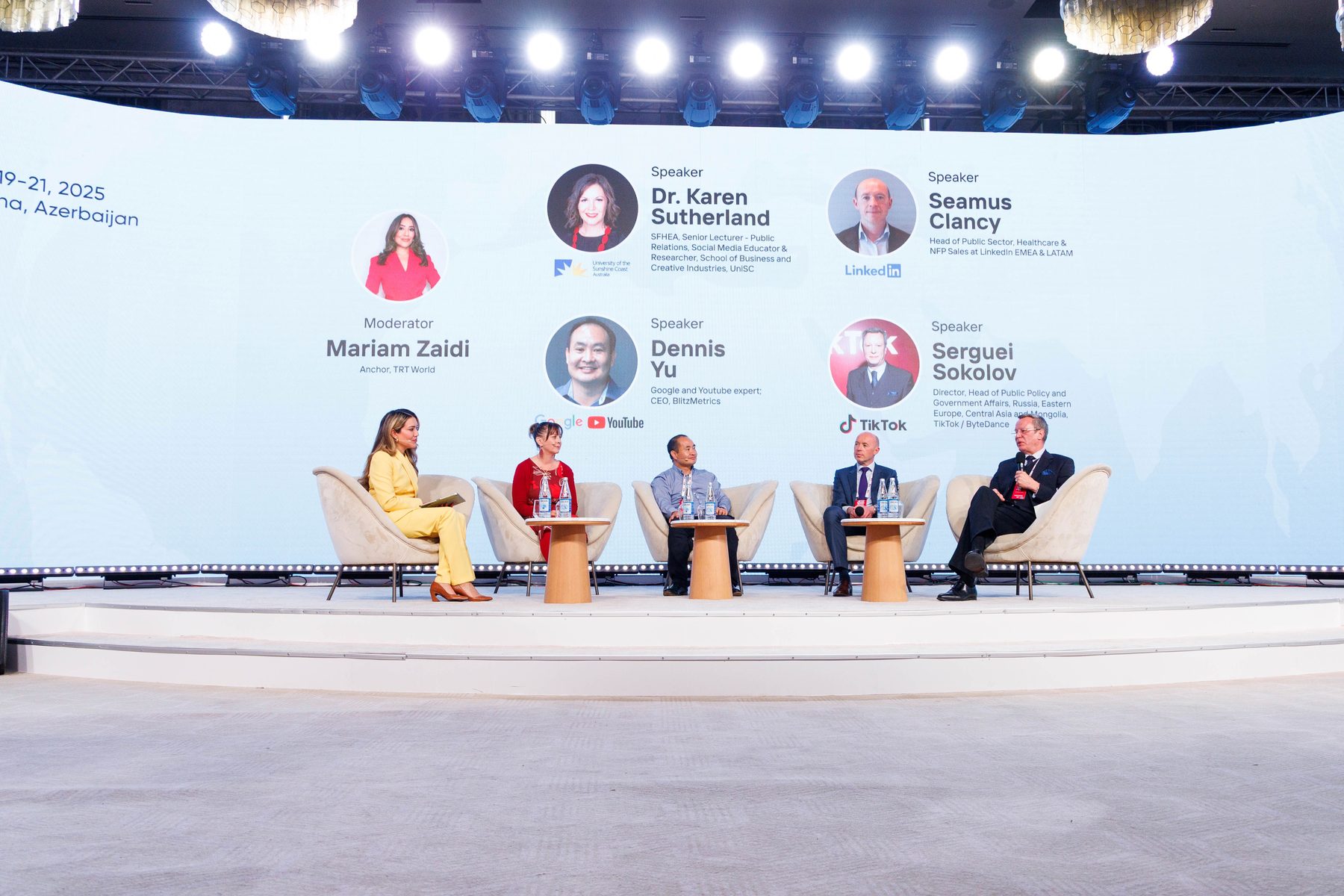
Dr. Karen Sutherland and I go back a decade: her testimonial was in our university program guide in 2018, we ran Dollar-a-Day on her page in 2019 (one boosted post: 15,100 reach, 2,100 engagements, four cents each), and last July we shared a Shusha panel with executives from LinkedIn and TikTok. She is a Senior Lecturer at the University of the Sunshine Coast, author of four books including Artificial Intelligence for Strategic Communication (Springer, 2025 — 29,000+ chapter accesses), a Gold Stevie winner, an Adobe Education Leader, and Ticker News’ AI commentator of five years.
Her problem is the most common one we see at the top of the expert market: the accomplishments are real, and the machines cannot see them. Her Personal Brand Score came out at 53/100 — Emerging. No Knowledge Panel. No Wikidata. And structured data on her own site pointing at a LinkedIn profile that is not hers.
The placeholder lesson
That last finding deserves its own section, because it is a lesson for every team handing SEO checklists to implementers.
Last year I sent Karen’s team a five-phase Knowledge Panel checklist. It included a draft Person schema with template URLs — the kind you are supposed to swap for the real ones. A diligent team member implemented it faithfully. Template URLs and all. For eight months her site told Google her LinkedIn was /in/karensutherland (a stranger’s) instead of /in/karenesutherland (hers), and claimed a Twitter handle she has never owned.
Nobody did anything wrong on purpose. The checklist assumed context its reader did not have. The fix is a rule we now write into every agent we ship: before any URL enters a bio, a post, or a schema block, load it and confirm it belongs to the person. Machines checking machines, with receipts.
What shipped in one afternoon
- A 15-page visual brand audit — cover photo from the 2025 Shusha stage we shared, score bars for all seven rubric components, a hub-and-spoke authority map, her four book covers, nine verified YouTube embeds (titles pulled via oEmbed, not from memory), the before/after entity graph, a 90-day plan from 53 to 75+, and the agent roster that runs it.
- The website fix package — new homepage title tag, rebuilt Person schema with verified sameAs, the four homepage service tiles re-pointed from
mailto:links to her actual service pages, a junk post slug repaired, and an About-page refresh that finally mentions her AI book and her Queensland AI Hub co-directorship. Her hosting tier locks the REST API, so these ship through a logged-in wp-admin session rather than the usual app-password route. - A ten-agent install kit for Claude Cowork — one markdown file she attaches and activates with a single sentence. It builds a brand brain (verified facts, canonical links, her voice, her offers), ten role files (content factory manager, transcript repurposer, publisher, schema guardian, Knowledge Panel campaigner, SERP monitor, speaking pipeline, lead follow-up, weekly scoreboard), and the guardrails: drafts only, no invented facts, verify every URL, plain-English logs.
- The decision email — drafted to Karen with me in cc, listing exactly three things that need her judgment: confirming award names and years before they enter schema, choosing whether “AI governance” or “AI and strategic communication” leads her positioning, and green-lighting three new pages (/contact/, /books/, /media/).
- This article — because a process you cannot read is a process you cannot repeat.
The four-stage factory, run agentically
The engine underneath the 90-day plan is the same Content Factory we run everywhere, four stages: Produce → Process → Publish → Promote, governed by a Friday Metrics → Analysis → Action review.
Karen’s version is unusually easy to fuel because stage one is already overflowing: a weekly Ticker segment, university lectures, client workshops, a podcast, and interviews for her next book. She does not need to create more content. She needs the other three stages to exist. That is what the agents do — transcripts to articles to schema-tagged posts to a dollar a day on the winners — for about ten minutes of her review time per day.
How the audit itself was built
- Mine the private history first. Ten years of email and Basecamp threads gave us the relationship receipts — the 2018 testimonial, the 2019 boost numbers, the 2025 handoff — that no web crawl would ever find.
- Crawl the public footprint in parallel. Two research agents ran at once: one on her sites (page inventory, titles, schema extraction, REST probes), one on everything else (books, awards, press, YouTube, socials).
- Verify before writing. Every video title via YouTube oEmbed. Every social URL loaded. Awards marked “pending her confirmation” rather than guessed into print.
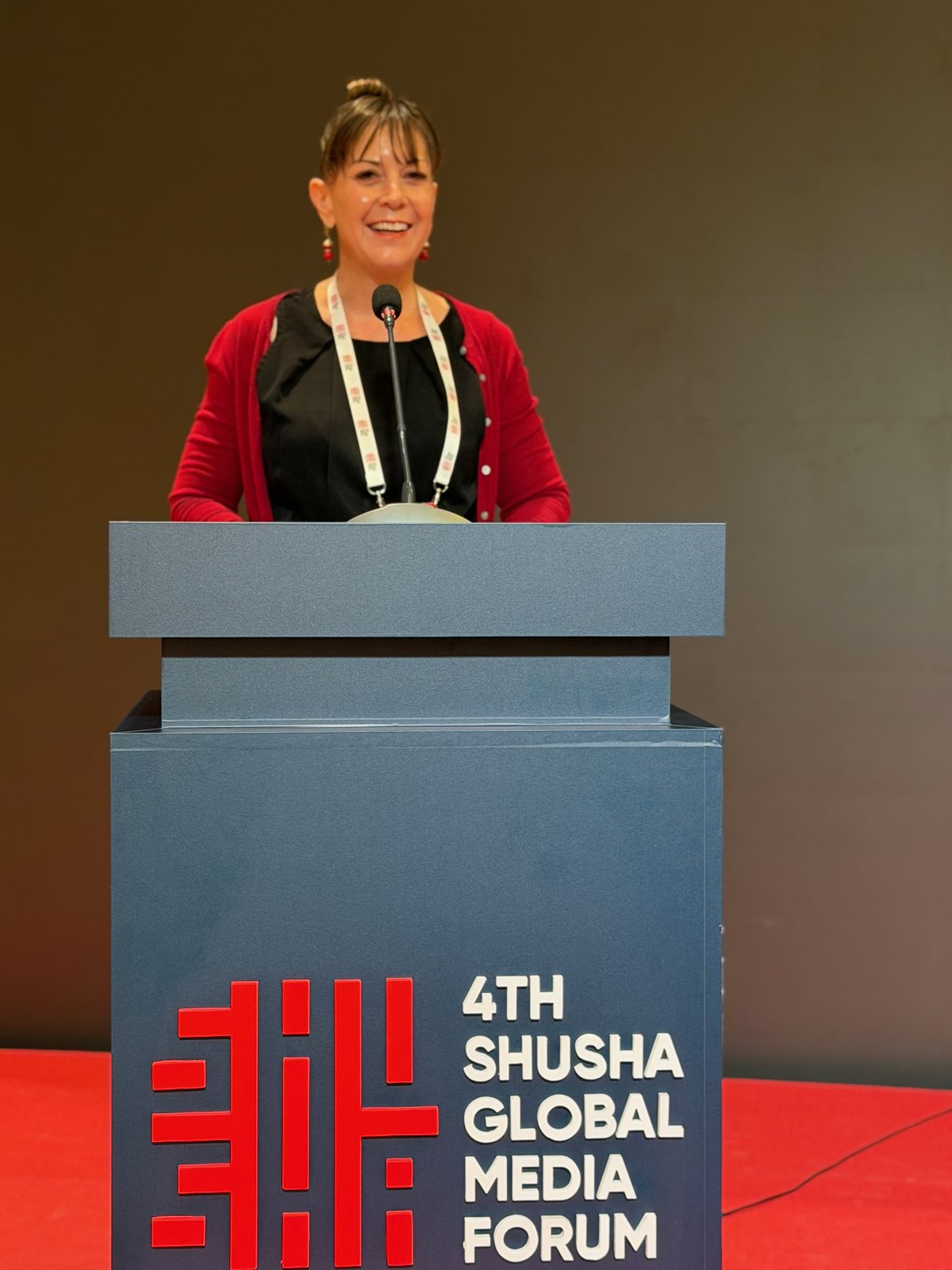
- Pull the photos from the actual library. Photos.app searches surfaced the 2025 stage shot with both our names on the speaker wall, the Loyola Chicago panel with Karen Freberg, and the podium photo taken three hours before the PDF was rendered.
- Score, design, render. Seven components, evidence next to every number, WeasyPrint to exactly 15 A4 pages, verified page-by-page as images before shipping.
What broke, so you do not have to discover it yourself
- iCloud photo exports stall. Originals download on demand; a nine-photo export delivered three files immediately and the rest over the following half hour. Export early, keep working, check back.
- WordPress.com Business locks anonymous REST. All four wp-json probes returned 401 at the platform edge. Plan for wp-admin sessions; recover page IDs from Elementor’s embedded config if you need them without login.
- Auto table layout will sabotage dense PDFs. WeasyPrint squeezed our evidence column to a word per line until
table-layout:fixedwent in. If a table renders tall and skinny, that is why. - Never caption a video from memory. The oEmbed endpoint returns the exact title and channel for any YouTube ID, no API key needed. Ten titles, ten correct captions, zero guesses.
The receipts
Score: 53/100 (Entity Home 13/20, Knowledge Panel 3/15, Search Ownership 9/15, Content Engine 7/15, Audience & Proof 11/15, Structured Data 4/10, Social Consolidation 6/10). Forecast if the 90-day plan runs: 79. Deliverables: one 15-page audit PDF, one 6-page install guide, one paste-in agent file, five site fixes staged, one decision email, this article. Elapsed time: one afternoon, ringside, while the forum was still going on.
The pattern to steal: audit from evidence, fix the machine layer, install the factory, hand the human only the decisions that are theirs. Karen’s authority did not change today. What changed is that the machines are about to find out.
Method links: the 100-point Personal Brand Score rubric · the Quick Audit · The System · why we write these meta articles. Karen’s entity home: drkarensutherland.com.