Private people graph. Face bubbles scored by authority, sized by influence, each a password-protected bio. How we map a personal brand privately · working example /derek/map/.
I take pictures with people so I remember them. The public version is the people directory — one hub, one card per name, and no tracking junk on the links.
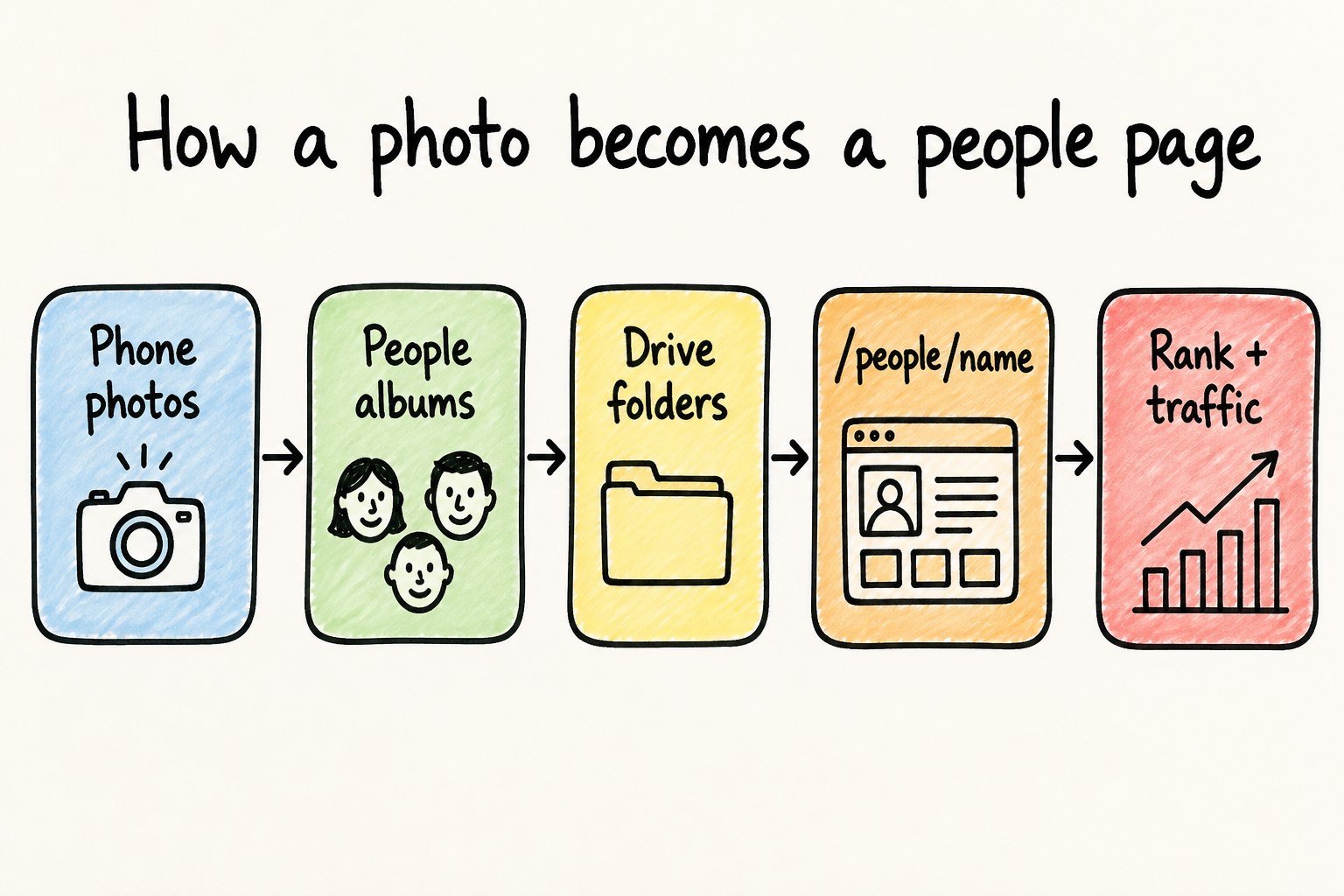
This page is the method I use to turn those photos into public cards. I start with the albums I already have, ship one card per person, then measure rank and traffic.
Which people get a card and which get a first-person honor page (like /jackwendt/)? The decision rule is here: When to build a card vs. a first-person honor page.
Start with the photos you already have
I take pictures with other people so I remember the moment, not so I can post a headshot later. Google and Apple now tag those faces into people albums. Agents pick the albums up and drop them into Drive people folders.
The storage work comes first. People pages are what the agent builds after the albums exist. I sat with Cam — his Cam Hazzard people card is already in the directory — and walked him through how I store and organize 75,000 photos across 14 TB.
Apple One family allocation lets the personal account go past the 2 TB single-plan cap. I also pay the 2 TB max on Google and Amazon. Cam wrote Cam Hazzard storage takeaways from that same video.
I keep four paid backups from the phone — iCloud, Google, Amazon, and Dropbox — so a phone wipe does not erase the library. The little-details backup note is the same stack in short form. Storage is the task before people pages.
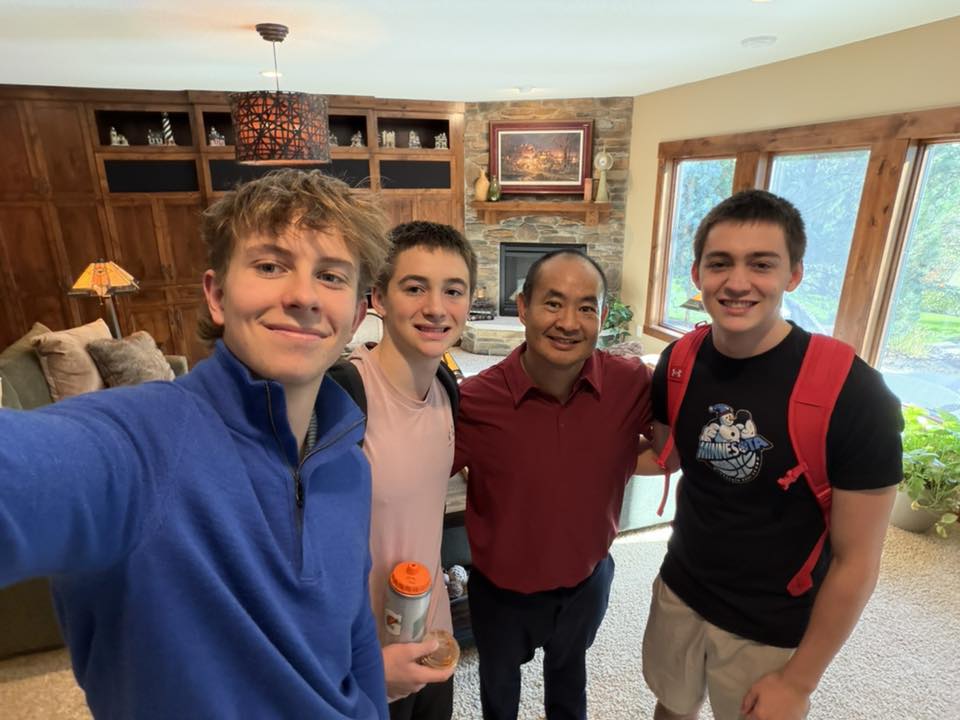
The team can access Content Factory photos and share photos with the team from those Drive people folders. Jack Wendt is the honor-proof example: a real photo of me with him, not a stock headshot. His card is the Jack Wendt people card.
Build one card per person
The hub is the people directory. The template is the Zach Peyton people card. The method lives on the people-pages skill page.
I keep the rules tight. One hub. Never a second /people/. I do not invent titles. Honor proof is a photo of me with them. If the download fails, I ship the card anyway. No query strings on permalinks or hrefs.
Do not scroll a hundred names. Read the groups. Each name is a real card.
Root honor pages
The directory card is the hub. When I want a first-person page on my own domain — names, dates, and links that strengthen the entity — I also ship a root honor URL in the person’s name: /IsaacHall/, /JackWendt/, /LeoPullman/ (Leo Pohlmann), /BrennanAgranoff/, /BryceClark/, /JakeCampoli/, /EliasBartu/, /KirtBox/. WordPress lowercases the slug; the host still serves the mixed-case URL. I do not invent a second biography. I point at the site they own, a dated article, and a photo of us when I have one.
/JackAllard/ already was a full Roof Launch landing (page 37070). I added a short aside there rather than replacing the canvas.
19 August 2026: the first sixty named clusters on my Google Photos People & pets list (excluding me and one celebrity false-positive) each have a root honor URL in that same pattern. Start at /MarkWagner/. Existing pages were left alone. New stubs use the people-directory bio, a dated article, or the photo dates themselves, and leave a line for me to narrate the frames.
Photo-first cards
I had pictures of us. That is enough to start the card.
- Brennan Agranoff people card
- Jack Wendt people card
- David Carroll people card
- Larry Kim people card
- Perry Marshall people card
Honor-post cards
I already wrote the story. The card is the entity home for that story.
Existing-home cards
They already had a page. The directory card is the pointer, not a second biography.
DealCon cards
The conference page is the event. The people card is the person.
Stubs we left thin
The name is not unique. I will not invent a company so the card looks finished. These stubs stay thin on purpose.
Connect each card to the Content Factory
This task is a leaf on personal branding and the Content Factory — the Process stage, where we repurpose what we already captured. I follow how we measure personal brands, hang topics on the Topic Wheel, and write to the blog posting guidelines.
The Personal Brand Score tracks search ownership plus the content engine. dennisyu.com is the person. blitzmetrics.com is the company method.
Before. Take the picture. Sort people albums. Share the library. Hang the name on the Topic Wheel. Point at the entity home.
After. Write the honor post. Repurpose it. Run Dollar a Day on the highest-authority cards to the target audience. Measure what moved.
Measure rankings and traffic
I do not ship 100 cards and walk away. I measure indexation of each /people/{slug}/ card, name-query rankings, referral traffic from honor posts, Dollar-a-Day engagement on the photo and card, and Personal Brand Score movement.
That is a weekly look, not a one-time dump. Rank and traffic tell me which cards earned a boost and which cards still need a photo, an honor post, or a cleaner entity home.
Run the same skill on the next site
19 August 2026 Dennis said yes: put the same people directory on the other personal brand sites, because we teach by example. The first two live hubs are not on dennisyu.com.
- camhazzard.com/people/ — Cam’s voice. Six cards from stories already on his site (Align, Fanatics Fest, Dunk Talk). Hub id 516.
- dylan-haugen.com/people/ — Dylan’s voice. Eight cards from Dunk Camp, Dunk Talk, Align, and DigiMarCon. Hub id 7161. Jack Wendt links only jackwendt.com.
Jeff Hughes, Anthony Hilb, and Brennan Agranoff were in the same yes. Jeff’s home is jsterlinghughes.com (REST locked; Jack Hughes runs the brand build). Anthony’s home is anthonyhilb.com (we publish there, no application password in Keychain). Brennan has no personal-brand domain — hoopswagg.com is Shopify, warehance.com is the product, brennanagranoff.com does not resolve. Until those three have a writable WordPress person-site, the worked example stays on their dennisyu.com honor and people cards, and the method is your network is the berry.
Derek’s working example still lives on the Derek people directory. It still does not go on moneyberg.com until someone says yes.
Start with one hub and the names you can already prove. Read the public skill. AI multiplies the album. It does not generate a network.