The exact checklist our team runs on every episode, clip, and Short — built from studying Diary of a CEO, Modern Wisdom, Dan Leibrandt's channels, and Alex Hormozi, and hardened by our own published failures.
Most podcast editing advice is taste dressed up as rules. Ours is a checklist, because taste doesn't scale across a team — and because we learned the hard way what happens when nobody checks.
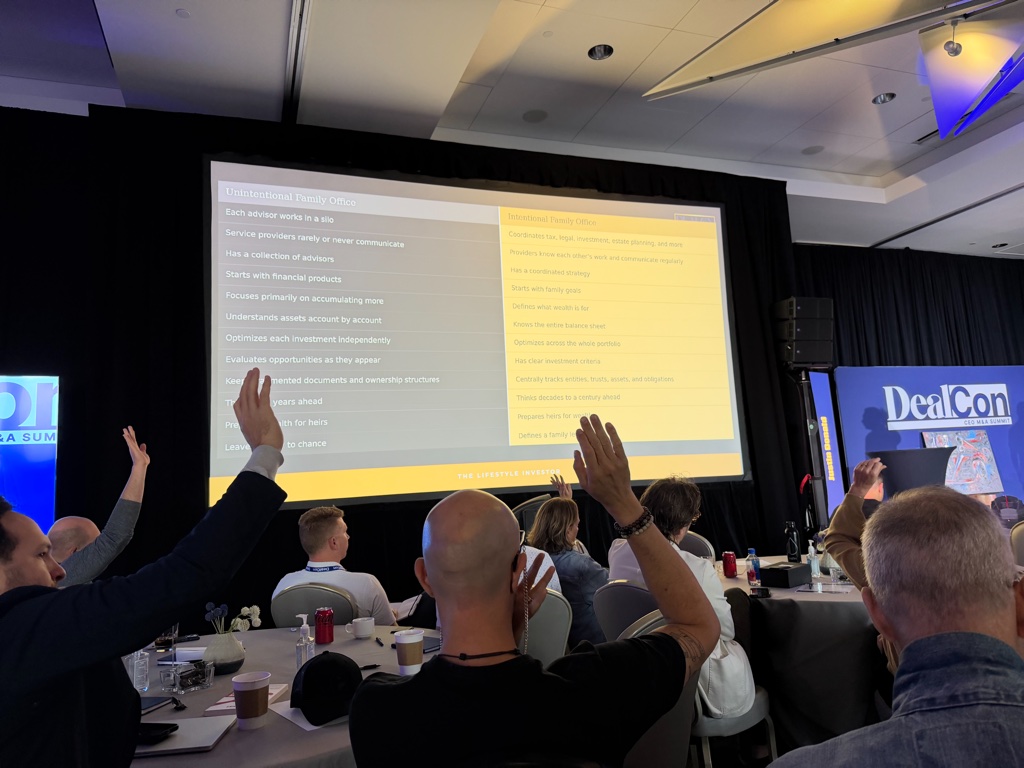
In October 2026 we published a genuinely good conversation — Amazon strategist Luba Ilyasova of the company OMG Commerce, recorded at DealCon in Austin, breaking down why brands grow sales while profit quietly disappears. Two days later its YouTube numbers were 43 views, a 2.1% click-through rate, and an average view duration of 45 seconds on a 27-minute episode. The conversation wasn't the problem. The packaging duplicated itself (the title and thumbnail said the same words), the opening explained instead of delivering, and the episode had been published before its companion article even existed — so the description had nowhere to send anyone.
That failure is now part of the standard. This is the whole system, published so our team, our clients, and our AI agents all work from the same page. This checklist is the video-side leaf under our Content Factory parent. Before a new series, inventory a YouTube channel so the library is known. The cut podcast episodes into segments case is the worked example this standard follows.
Step 0: Decide what job the video is doing
Every rule downstream depends on this, and most channels never decide it.
- Honor / Private — the video exists to honor a person and earn their approval. Their name and dignity lead. Clickbait that would embarrass the subject is forbidden. Success is the subject feeling honored.
- Growth / Public — a cold audience on browse and search. The hook leads; the guest's name leads only if strangers already know it. Success is click-through rate plus retention.
- Niche Authority — a known niche audience searching for outcomes (this is Dan Leibrandt's lane in home services). Guest name + specific outcome + proof. Success is the niche viewer thinking "that's for me."
One cut cannot pretend to do two jobs. A package can carry two variants — an honor cut and a growth cut — but each is judged by its own job.
Step 0A: Write the look spec before the first cut
Borrowed from Brandon Carter's AI editing system and adopted into our standard in October 2026: the look is described in plain words before editing starts, and QA judges the cut against that recorded spec — not against anyone's taste in the moment.
The spec records: the job; the layout in plain words ("graphics above the speaker, speaker full-frame"); face size and framing; caption style and accent color; which named graphic patterns the piece will use; and the take-cleanup brief (filler words and stumbles cut, dead air at the start removed, best takes kept, noise reduced). If the look can't be said in two sentences, it isn't a spec yet.
Step 0B: Use a named pattern library for attention resets
Attention is reset every 5–6 seconds on long-form and every 3–4 seconds on Shorts. Editors don't improvise those resets; they pull from a named library:
- Proof wall — screenshots, results, or testimonials behind the speaker, when a claim needs receipts.
- Tier list — rankings built live on screen.
- 3D phone mock — when the content is a post, DM, or app screen.
- Screen zoom — punching into a page or dashboard the viewer must actually read.
- Word-behind-speaker — one huge keyword revealed behind the subject at the hook line.
- Reel wall — a grid of past clips sweeping behind the speaker to show a body of work.
- B-roll cutaway — real footage of the place, product, or moment.
- Two-shot nod cut — the listener reacting during the speaker's best lines; the relationship is content.
- Punch-in / angle change — a tighter reframe for emphasis when no graphic is needed.
Revisions come back as plain-English notes ("make my face bigger," "swap the proof wall for the tier list at 0:12") and are returned as versioned renders — v1, v2, v3. Nobody hand-tweaks a timeline for notes-level changes, so any version can be rebuilt and compared.
The universal gates — fail any one, don't ship
- Rights cleared for everyone on camera, or the piece is private and goes only to the subject.
- Identity check: every face, name spelling, company, and credential is the right person — read the frame, don't trust the filename.
- Real color, real people. No black-and-white or plain black title cards as the visual identity. Ever.
- Audio: clean speech, no clipping, loudness around −14 LUFS, no silent stretch longer than two seconds anywhere.
- No dead frames: no black frames, frozen frames, screen-share accidents, or slate cards in a public cut.
- A caption track exists and is accurate, names spelled right. Main videos get no burned-in captions. Burned-in captions are for Shorts only.
- The title carries no date. Dates live in the description and the record.
- First frame test: paused at 0:00, a stranger can tell who, what, and why in one glance.
- Last frame test: the ending is designed — a payoff, a question, or a call to action — never a mid-sentence cut.
Packaging: the title and thumbnail are 50% of the result
What the best operators actually do:
- Diary of a CEO tests thumbnail variants at scale — up to roughly 100, pre-tested as ads — and turns the guest's strongest sentence into the title and thumbnail text. One emotional face, huge. Two to five words. That system has taken episodes from 2% to 20% CTR.
- Dan Leibrandt's niche channels run
Guest Name: Specific Outcome (Proof in Parentheses)— "Ellen Rohr: The Pricing Formula for $200K+ Profit (Step-by-Step Math)." His clip channels drop the name entirely and run pure curiosity: "He Spent 0.5% on Marketing. Here's Where the Money Went." - Modern Wisdom plans scroll-stopping moments into the interview itself, then releases mid-length clips around the episode — all on one channel.
Our checklist:
- Thumbnail text five words or fewer. If you need a sentence, the hook is wrong.
- Thumbnail text and title complement, never duplicate. Duplication was the Luba episode's core defect.
- One face, big — at least 40% of frame height, real emotion readable at arm's length. Two faces maximum, and only for a genuine two-person conversation.
- Specificity sells: a number, a dollar figure, or a named thing beats any adjective.
- The curiosity gap: the package promises a payoff it doesn't fully give away — and the episode must actually cash that promise.
- Small-size test: shrink the thumbnail to 10%. Face, hook words, and subject still obvious? If not, redesign.
- 3-second test: a stranger gets the promise in three seconds or less.
- For hero episodes, make three variants and pick by these rules — or use YouTube's Test & Compare. Never ship the auto-generated frame.
- The guest would be proud to screenshot it. If not, it's wrong for every job type.
These title rules are for YouTube; article titles follow the Blog Posting Guidelines (keyword-first).
The formats
Long-form episodes. Cold open first: the single strongest 15–30 seconds of the conversation plays before any title card — a silent title card at 0:00 is an automatic fail. Then a promise intro of 20 seconds or less: who this is, what you'll get, one credibility line. Cut dead air at the start, then jump-cut the remaining dead air until the pace feels like 1.25× at 1×. Chapters are mini-hooks at verified timestamps, at most three, written in sentence case, not "Part 1." First two lines of the description are the hook and the guest's credibility, before the fold. The best quote and the payoff timestamp go in the description. The episode ends on a designed close, with an end screen to the next best video. On long videos only, the pinned comment is a short line plus the article link.
Mid-length clips (2–10 minutes). The Modern Wisdom weapon: one idea per clip, fully standalone, released around the episode on the same channel. Open on the statement, not the question that prompted it.
Shorts. First frame is the hook — face plus bold hook text at 0:00, starting on the first syllable. Burned-in word-by-word captions, one to three words at a time, key word highlighted, placed upper-middle where they're clear of the interface. One takeaway, 30–60 seconds, pattern interrupt every 3–4 seconds, and an ending that loops back into the first line. Shorts are reach, not funnels — no sales pitch. A Short gets a two-to-three line description and no article link.
Publish QA — at the destination, after upload
A video isn't done when it's uploaded; it's done when it's verified live. This Publish QA is the one upload gate, together with repurposing QA. It already carries the article-first rule, the description link, and the pinned comment, so a second list would only repeat them:
- Visibility is exactly what was intended — and in YouTube Studio, "Private" and "Unlisted" are one careless click apart, so re-open and confirm.
- Put the custom thumbnail on during upload, then confirm it is actually showing, not an auto frame.
- Title, description, and chapters render correctly and timestamps land on the right moments.
- The caption track is present and spot-checked on the live video. On a company channel, comments use the person's name and never say "I".
- Win the first hour: the guest has the link and their share post ready at publish; the team engages comments immediately.
- For interview content, the companion article exists first, so the description links to it and the pinned owner comment names it on day one. Publishing the video before the article — our original Luba mistake — inverts the loop and strands the episode.
- Run the YouTube Upload Checklist task in the same pass: comments on, a related video on every Short, the paid-promotion and AI-use questions answered, and the video reopened to confirm.
The post-publish rescue
A published video is not finished. At 24–48 hours, check CTR and first-30-seconds retention — and diagnose them as different diseases. Low CTR with decent retention is a packaging problem. Decent CTR with low retention is a promise problem: the opening didn't pay off what the packaging sold, and no thumbnail will fix it.
The rescue sequence, one variable at a time:
- Duplication audit — title and thumbnail side by side; rewrite whichever repeats.
- Name placement — on a growth video, an unknown guest's name moves to the end of the title. The hook leads.
- Three new thumbnail variants from real frames of the actual conversation — never generated faces — each passing the small-size and 3-second tests. Real frames are right for thumbnails. Article photos stay real photos of the guest.
- Swap once, then wait — judge on 48–72 hours or roughly the next 1,000 impressions. Never judge on a handful of views; never swap daily and call noise a signal.
- Description retrofit — hook first, benefit-led chapter titles at the same verified timestamps, entity links, and the article link the moment the article is live.
- Pinned comment and end screen — on long videos only, the pin is a short line plus the article link. The best quote and the payoff timestamp stay in the description. End screen to the next episode and the show playlist.
- Shorts as the discovery engine — three Shorts from the strongest moments. At small-channel scale, discovery comes from Shorts, not browse.
- Log the before/after — CTR, average view duration, and views at swap time and at the judgment window. The next episode's packaging starts from this data, not from taste.
Applied to the Luba episode on October 27, 2026: thumbnail variant "SALES UP. PROFIT GONE?" (four words, real photo, faces large) replaced the duplicated package, and the title became "Why Amazon Sellers Grow Sales and Lose Profit — Luba Ilyasova Explains" — hook first, name last, nothing repeated. The retention lesson — open on the payoff, not the biography — is now baked into the cold-open rule for every future episode.
Why publish a standard at all?
Because a standard that lives in one person's head dies with their calendar. Ours runs identically whether the editor is a person or an AI agent: decide the job, write the spec, cut to the spec, QA at the destination, measure, rescue, log. The checklist is the product. The episodes are just where it proves itself.
Sources: Creator Playbooks' breakdowns of the Diary of a CEO team and of Modern Wisdom producer Ben Hancock; live title patterns read from Dan Leibrandt's @LocalMarketingSecrets, @PestControlLegends, and @PestControlMillionaires (October 2026); Hormozi short-form caption standards; and our own episode records, including the Luba Ilyasova rescue above.
Canonical references
- Parent: the Content Factory parent
- Article side: the Blog Posting Guidelines
- Framework: the SEO Tree framework
- Upload: YouTube Upload Checklist task
- Sibling case: cut podcast episodes into segments
- Sibling process: inventory a YouTube channel
- Short form: the one-minute video guide
- Operating cycle: the MAA operating cycle